
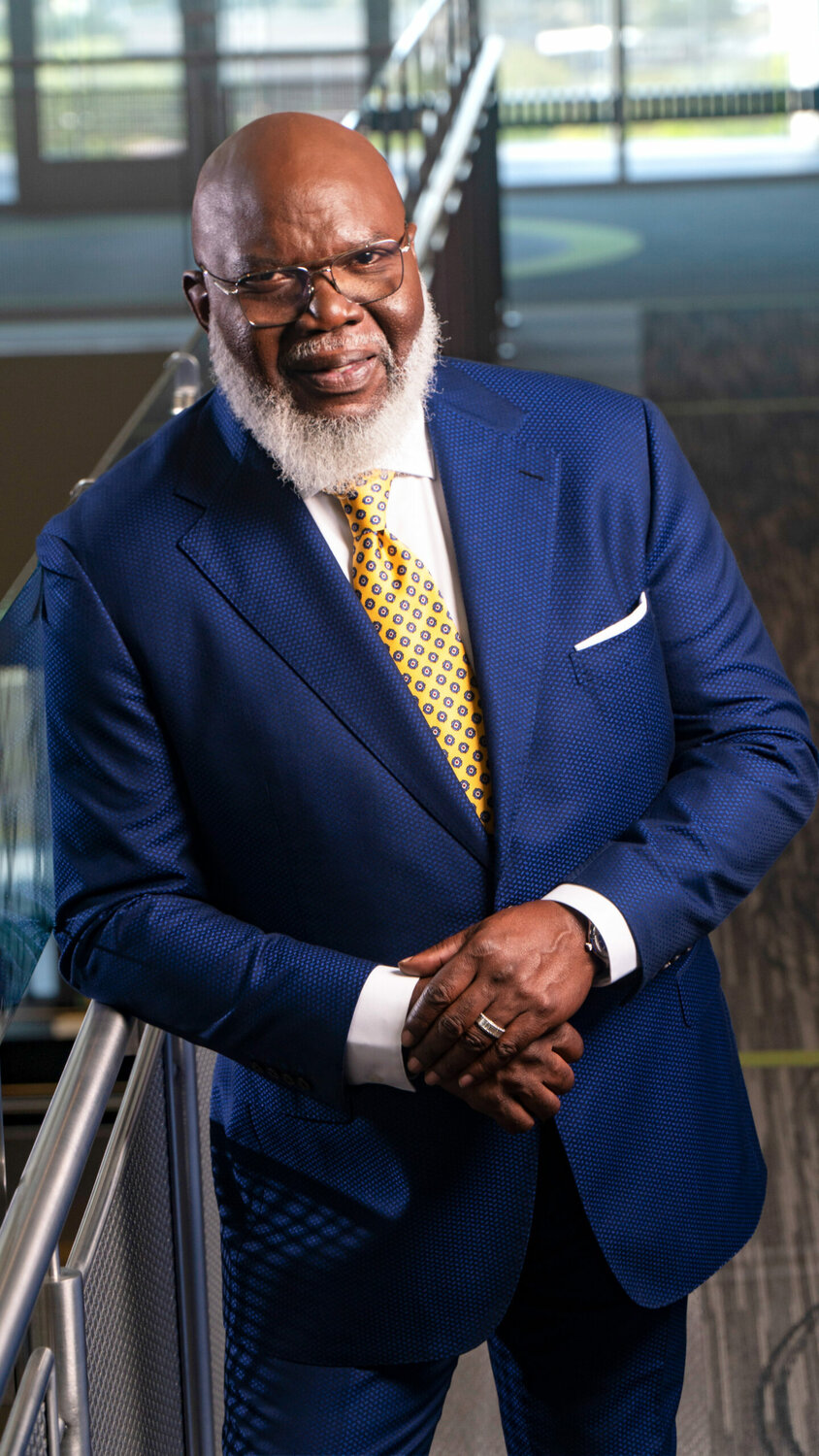
T.D. Jakes in April announced that he is stepping down from his leadership role as senior pastor of the Dallas-based church, The Potter’s House, that he founded in 1996, but he’s not stepping out of the public’s eye.
Along with continuing to serve as Chairman of the T.D. Jakes Group, Jakes will look to expand his global footprint in the media business, according to a company press release.
The faith leader and cultural influencer announced this past April that he will soon launch a new podcast, “My Next Chapter,” as part of a new partnership with iHeartMedia, from which he will launch his own slate of shows with iHeartPodcasts.
For nearly two decades, T.D. Jakes has also been very active as a producer of numerous theatrical and television movies that have entertained and inspired audiences around the world. Such projects include theatrical releases Jumping the Broom, Sparkle, Black Nativity and Heaven Is for Real, as well as TV content such as Lifetime’s Seven Deadly Sins film franchise.
In a 2023 conversation with me for the Multichannel News cable TV trade publication about The Seven Deadly Sins franchise —which attracted nearly seven million viewers with its first four films, Wrath, Greed, Envy, and Lust, which aired between 2021 and 2022 (followed by a fifth installment, Pride, in 2023) (https://www.nexttv.com/news/lifetime-tackles-pride-in-new-seven-deadly-sins-movie)—Jakes shared his reflections on his screen projects and how they align with his broader mission to inspire and uplift while tackling pressing social and economic issues both on-screen and behind the scenes.
An edited version of the interview appears below.
R. Thomas Umstead: When you first created and started to think about the Seven Deadly Sins franchise, did you think that it would have the impact and get the reception that it has?
T.D. Jakes: There is a great affinity in the Black community to see movies for us by us where we tell our own stories and tell our own narratives and power our own people, and we’re grateful that Lifetime has created a platform that allows African-American actors and producers to have a stage to share our talents, not only with the Black community, but with the rest of the world.
RTU: How important are these movies in terms of bringing stories that we haven’t seen in the past?
T.D.J.: I think it’s extremely important from a sociological perspective as well as it closes the wealth gap by creating jobs not only for the actors and producers, but also for the makeup artists and the caterers and all the other jobs that are created. Anytime we do a film, it also pumps the wealth into the Black community that I think is important, but the primary reason that I think it is important is because a lot of assumptions are made about Black people and Black families. For us to have a narrative where people get to see us and know us rather than just work with us and pass us in the street, helps to bring about a greater synergy in the overall American texture of society in a way that I think is very important and very profound. Other groups begin to understand that we are people too, and we love our families, and we have our issues, and we have our strengths. It also really shows how important entrepreneurship is to our community, and how critical it is to our family’s aggregate wealth.
RTU: Obviously this is one of many projects that you’ve done in the television space. Where do you see the television industry today, and what are you looking to continue to accomplish with the projects that you’re working on?
T.D.J.: Well, I think this is a turbulent time economically for all industries, and that television is not exempt from that turbulence in terms of how much they’re able to get for advertisements, which really helps to thrust income into the industry. So sometimes you have to do more with smaller budgets than what I would like, and maybe perhaps than they would like, and that’s all indicative of the times that we’re living in, where people are inundated, number one, with so many different options with which they can consume content from streaming to television and all the myriad of cable stations that are available to them. So we have to be very creative in how we go about presenting the kind of provocative stories that draw attention and continue to affirm and escalate how we are seeing.
RTU: And obviously those are valuable messages that again, we don’t necessarily see on mainstream television. Will you look to continue to develop content in that genre going forward, or will you look to maybe expand some of the things that you’re developing and working on?
T.D.J: Well, we’re primarily going to be value-based television because that fits our overall brand, and we might do dramedies, we might do some more dramatic content, but I try to do films that have an underlying message in them. They may get gritty because life is gritty, but they always have an underlying cautionary tale to them that helps us to rethink how we interact with our families and with people in the world around us.
RTU: Having said that, what else are you working on going forward?
T.D.J: Oh, some of everything. So we’re going to continue to put things in the pipeline, maybe interviews, podcasts, sociological issues, and subjects that help America to better understand minorities, underserved communities, and the diversity that exists in the Black community. We’re not a monolith, and we’re not all underserved or underprivileged, and our films have tried to reflect that. If you notice, the common thread in all of our films is you see a spectrum of Black people up and down the socioeconomic levels of life to dispel the myth that all of us come from one sector economically or sociologically. We’re everywhere. We’re in first class, we’re in coach, and we’re putting bags on the plane, we’re driving the truck. I mean, we’re all types of people, and so our movies try to reflect that diversity, which I think helps to deter stereotypical ideas and ultimately may affect in some small degree, racist behaviors and assumptions that are so prevalent in our society right now.
RTU: I thank you very much for taking the time out to talk to me, and I wish you well on all your future endeavors going forward.
T.D.J: Thank you so much, Tom. Have a great day, sir.